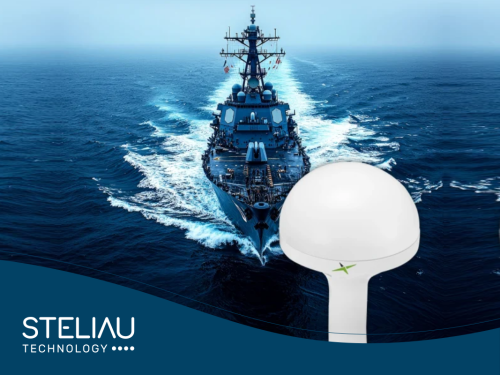
More than 70% of the Earth's surface is covered by oceans, driving a high demand for GNSS solutions in the maritime field. From navigation and coastal monitoring to dynamic positioning, port operations, and rescue missions, all these applications depend on a high-quality GNSS antenna to ensure accuracy and availability. Discover what features to look for.
Navigating the GNSS Constellation Options
When choosing a GNSS antenna, it's key to consider which satellite systems you'll be using based on the application's location. There are six GNSS constellations, of which GPS (US), BeiDou (China), Galileo (EU), and GLONASS (Russia) offer global coverage. For maritime or high-latitude applications, a multi-band, multi-constellation antenna is recommended to ensure consistent accuracy and reliability, especially in regions where some systems have better visibility.
How to Maximize Accuracy, Resiliency, and Longevity
A multiband antenna offers three key benefits: it enables global expansion without redesign, improves resilience to GNSS interference and attacks, and increases accuracy by leveraging L-band correction services such as Precise Point Positioning (PPP). It's ideal for applications requiring global coverage, security, and high accuracy at low cost, especially in environments such as ports and autonomous vehicles.
What Makes an Antenna “Marine Grade”
The Taoglas Neptune XAHP.30 GNSS antenna is designed for extreme marine environments, both freshwater and saltwater. It offers multi-band and multi-constellation support and features a weatherproof, splash-proof, and bird-proof IP67 housing. It operates reliably between -40°C and +85°C, ideal for global GNSS solutions on a single reference.