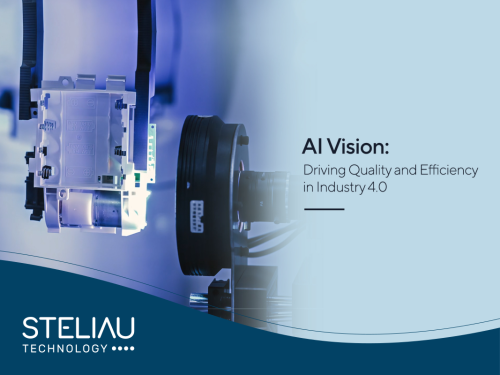
AI Vision combines artificial intelligence and computer vision technologies to enable machines to interpret and analyse visual data in real time. By integrating deep learning algorithms with image processing, AI Vision enables manufacturers to automate inspections, monitor production, and optimise operations with greater accuracy and efficiency than ever before. The AI Vision market is rapidly expanding, driven by advances in deep learning, widespread adoption of cloud computing, and the growing use of edge computing.
Real-time applications
Artificial Vision revolutionises traditional quality control by automating defect detection on production lines. Unlike manual inspections, which are prone to human error and fatigue, Machine Vision systems analyse images and video sequences with high precision and speed, ensuring consistent product quality and reducing labour costs. In addition to defect detection, Machine Vision can be used in a wide range of manufacturing applications.
- Object recognition and classification: efficient identification and categorisation of products according to visual characteristics.
- Process monitoring: continuous observation of production to detect anomalies and optimise workflow.
- Worker safety: monitoring of hazardous conditions to prevent accidents.
- Inventory management: visual tracking of stock levels and warehouse organisation to improve logistics.
AISVision 365: a practical cloud-based solution
AISVision 365 is a browser-accessible, installation-free platform that enables manufacturers to implement AI Vision projects in a single working day, without the need for specific hardware or AI expertise. The platform offers multiple AI algorithms covering classification, segmentation, anomaly detection and more. Based on information from over 100 real industrial applications, AISVision 365 integrates seamlessly into existing production environments.
In one example, by using continuous optimisation and data collection, a company improved inspection accuracy rates from 93% to over 97%, substantially reducing reliance on manual inspection.